
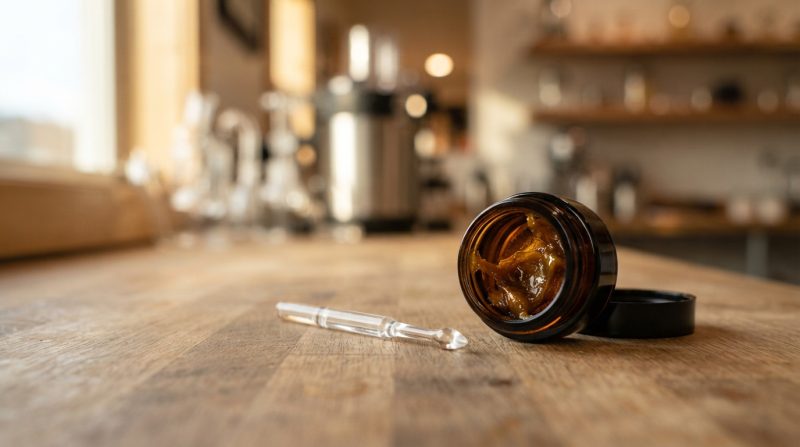
Short answer:
-
THCA concentrates are refined hemp extracts that isolate tetrahydrocannabinolic acid, available in forms like diamonds, badder, crumble, sugar, and shatter.
-
They stay non-intoxicating until heated, since dabbing or vaping triggers the conversion to THC.
-
Federal hemp compliance currently requires under 0.3% Delta-9 THC, though rules are set to change in December 2026.
Shopping for concentrates for the first time usually means sorting through unfamiliar textures, extraction terms, and compliance language all at once. This guide breaks down the most common questions buyers ask before choosing a product, so the decision feels less like guesswork and more like an informed choice. Anyone exploring THCA Concentrates for the first time will find most of the confusion clears up once a few basic facts are understood. Shop Luminate’s refined Hemp products to explore available options and make informed purchasing decisions.
What Exactly Are THCA Concentrates?
THCA concentrates are extracts that contain high levels of tetrahydrocannabinolic acid (THCA) in its raw form. They are produced by stripping away plant material so that what remains is far more potent than raw flower.
A few things set these products apart from flower-based alternatives:
-
They are extracted to remove plant material, leaving behind pure, potent THCA.
-
THCA itself stays non-psychoactive until heat triggers the conversion, so the jar on its own isn’t psychoactive.
-
Potency in finished products commonly runs somewhere between 70% and past 90% THCA, depending on the extraction method.
Because the chemistry only activates with heat, these products are meant for dabbing or vaporizing rather than casual handling or sampling raw.
Which Textures and Types Are Most Common?
Concentrates are not a single product; they come in several distinct textures, each shaped by how the extract is processed.
|
Type |
Texture |
Typical Use |
|---|---|---|
|
Diamonds |
Hard, crystalline, often near-pure THCA |
Dabbed alone or paired with sauce |
|
Badder |
Soft, whipped, wax-like consistency |
Dabbed or layered into joints |
|
Crumble |
Dry, crumbly, easy to break apart |
Dabbing or mixing into flower |
|
Sugar/Shatter |
Grainy or glass-like, varies by batch |
Dabbing for flavor and potency |
Diamonds are considered the purest format, since they are dense and pure, often exceeding 99% THCA. Badder and sugar formats trade some of that purity for texture and ease of handling, since manufacturers manipulate temperature and solvent levels during extraction to reach a looser, grainier consistency.
How Should Concentrates Be Stored?
Storage matters more for concentrates than most buyers expect, since texture can shift quickly under the wrong conditions. Unlike flower, concentrates behave differently in storage and do better away from humidity-controlled jars.
-
Keep badder, crumble, diamonds, shatter, and sugar in a cool, dark spot rather than refrigerating them, since condensation can ruin texture when concentrates are chilled.
-
Avoid direct light exposure, which can degrade both potency and aroma over time.
-
Check any included lab documentation, since every batch ships with a published Certificate of Analysis, so you can check the THCA percentage at the time of testing.
Proper storage habits protect both the texture and the cannabinoid content buyers are paying for.
Are THCA Concentrates Legal Right Now?
Current federal hemp law treats THCA concentrates as compliant hemp products as long as they fall under 0.3% THC, they’re considered hemp products under the 2018 Farm Bill, which are legal on the federal level. That standard is changing soon, though. Starting December 11, 2026, hemp will be measured by total THC rather than Delta-9 alone, a shift that the U.S. Department of Agriculture’s hemp program oversees at the federal level and that is expected to affect concentrate compliance nationwide.
Buyers should also know that legality can vary by state even under current federal rules, so checking local regulations before ordering remains a practical step regardless of where a product ships from.
Frequently Asked Questions
Do THCA concentrates get someone high before they’re heated? No. Raw THCA will not bind to the body’s receptors until heat triggers the conversion, meaning the product stays inactive until it is dabbed or vaporized.
What is the difference between solvent and solventless concentrates? Solvent-based concentrates use a solvent to extract cannabinoids; solventless ones use only heat and pressure. Rosin is the most common solventless example, while badder and sugar often rely on solvent-based methods.
Why do diamonds look different from badder or crumble? Diamonds form as crystalline structures during extraction, while badder and sugar textures come from adjusting temperature and solvent levels during extraction, producing a softer or grainier result instead of hard crystals.
Will THCA concentrates stay legal after 2026? Current federal hemp status is expected to change once the total-THC standard takes effect in December 2026, so compliance details should be confirmed again as that date approaches.
Next Steps for Choosing a Concentrate
Choosing between diamonds, badder, crumble, sugar, or shatter mostly comes down to personal preference for texture, flavor, and dabbing style rather than one format being objectively better. Luminate provides hemp-derived products crafted for flavor, potency, and everyday recovery routines, with lab testing applied across its concentrate lineup. Those ready to compare formats firsthand can Shop Luminate Products to review current lab results, textures, and available strains before placing an order.